thumb (1).jpg

Performing Resistance

Resistencia Performática

〰️

Performative Resistance

〰️

Resistencia Performática 〰️ Performative Resistance 〰️

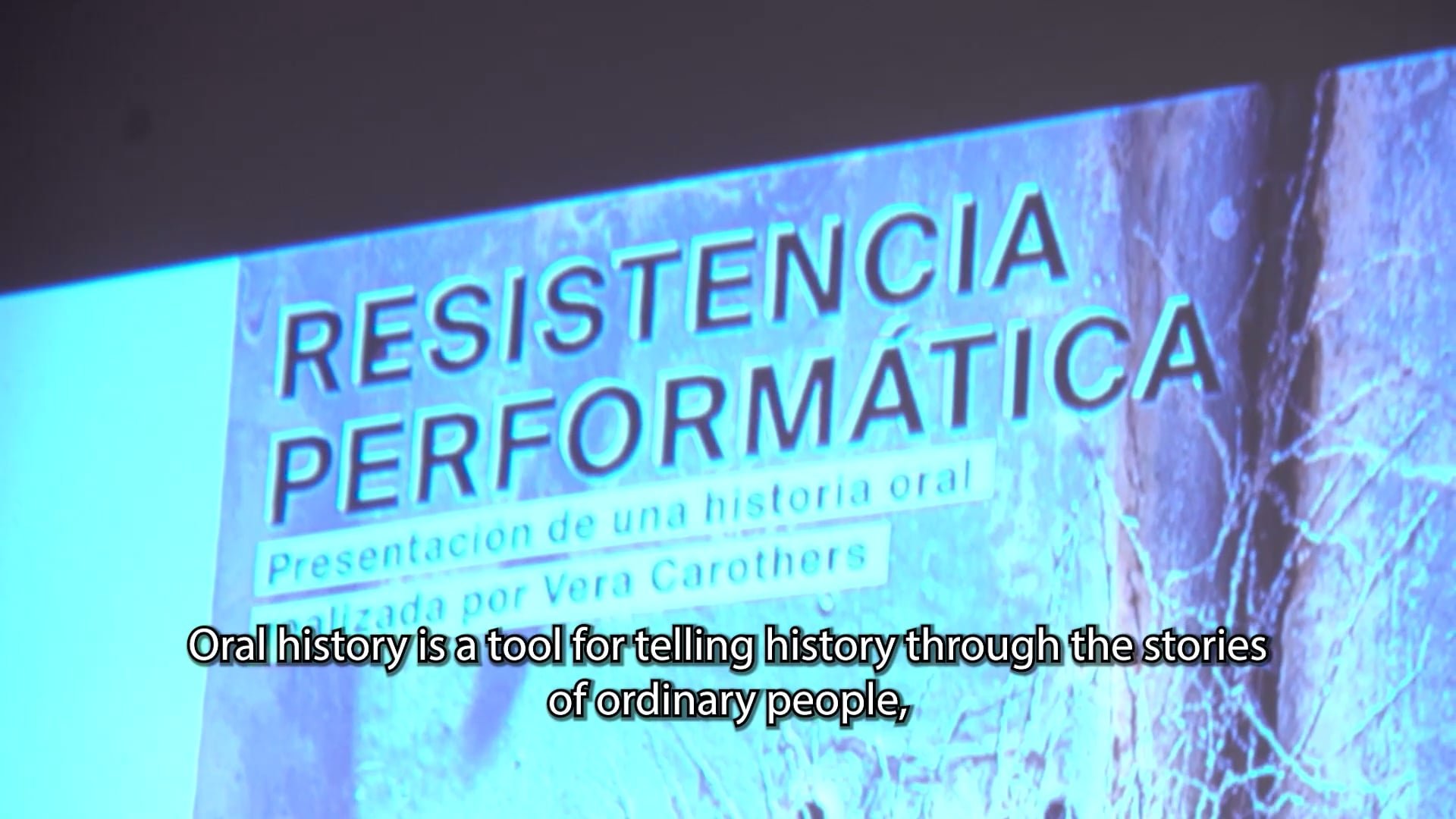
In Performing Resistance (2025), I documented how artists and activist groups in Argentina use the performing arts to engage with political movements. With funding from the Fulbright Association, I compiled an oral history featuring the voices of contemporary Argentine artists, activists, and scholars. I published a series of articles in The Brooklyn Rail, Lux Magazine, and elDiarioAR. In December 2025, I presented the project at La Tribu Mostra, an LGBTQ+ bar and community radio in Buenos Aires. The archive at Memoria Abierta, an alliance of human rights organizations, agreed to house the interviews.

🌹🌹🌹

El proyecto Resistencia performática (2025) es fruto de un año de investigación sobre el rol de las artes escénicas y la performance en la lucha colectiva argentina. Compilé una historia oral con voces de artistxs, activistxs y investigadorxs que se presentó en diciembre de 2025 en un evento en La Tribu Mostra. También se publicaron varios artículos en medios argentinos y estadounidenses. Las entrevistas están archivadas en Memoria Abierta.
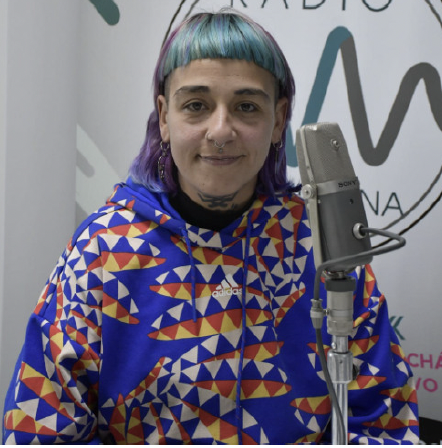

 
[Art] is a helpful tool in that it allows people who are not that tuned into a certain political issue to see it from another perspective, through beauty.
— Gala Otero, Theater Teacher & Activist
 
 
I believe that the role of culture is to persist, because as for resisting—we have already resisted, and we will always resist. So now we must persist.
— Teresita de Jesús Guardia, Actress & Theater Director
 

@lodecata


Creating a space and time where you encounter another person to feel or think from a place of sensitivity involves a lot of listening, a lot of openness, and that, these days, is political.
— Casandra Velázquez, Actress, Dancer, Performer

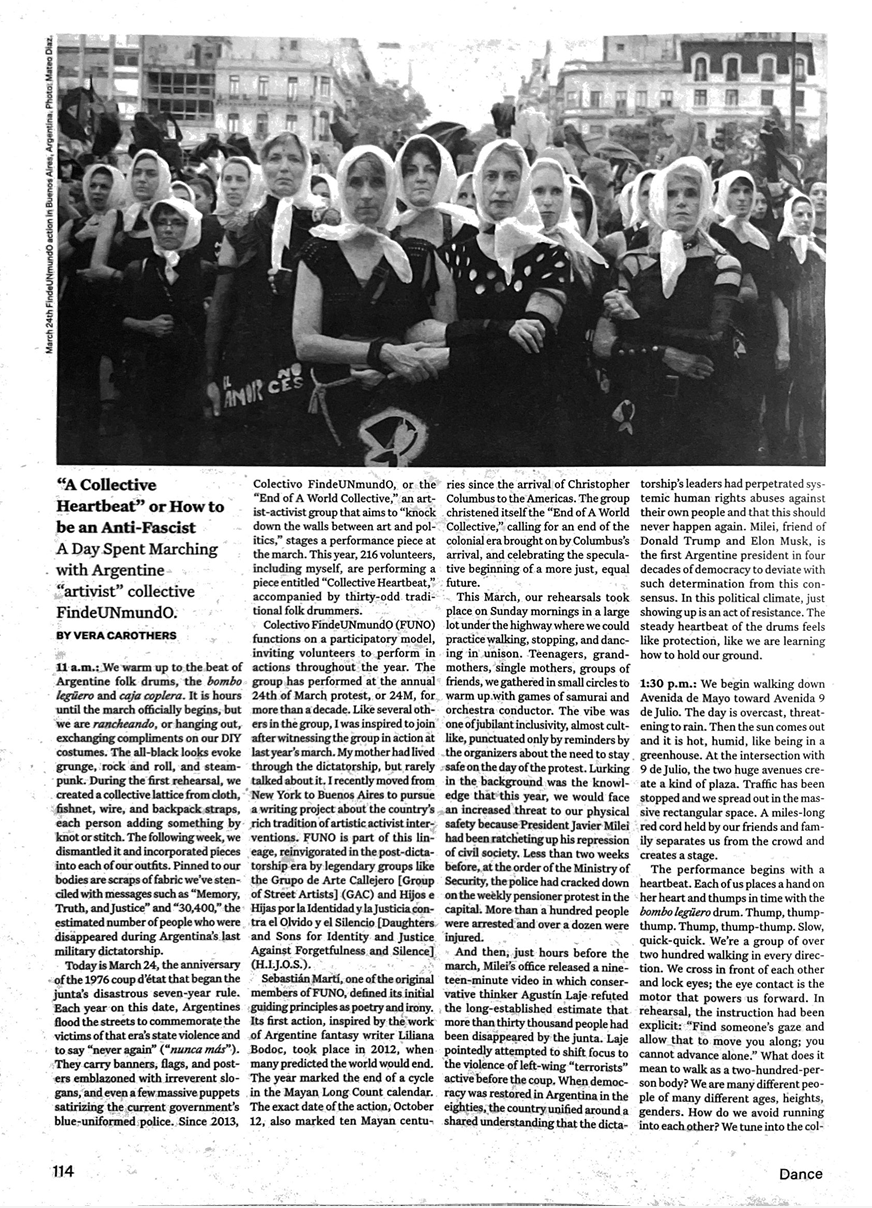
“A Collective Heartbeat” or How To Be an Anti-Fascist: a Day Spent Marching with Argentine “artivist” collective FindeUNmundO, The Brooklyn Rail, May 2025

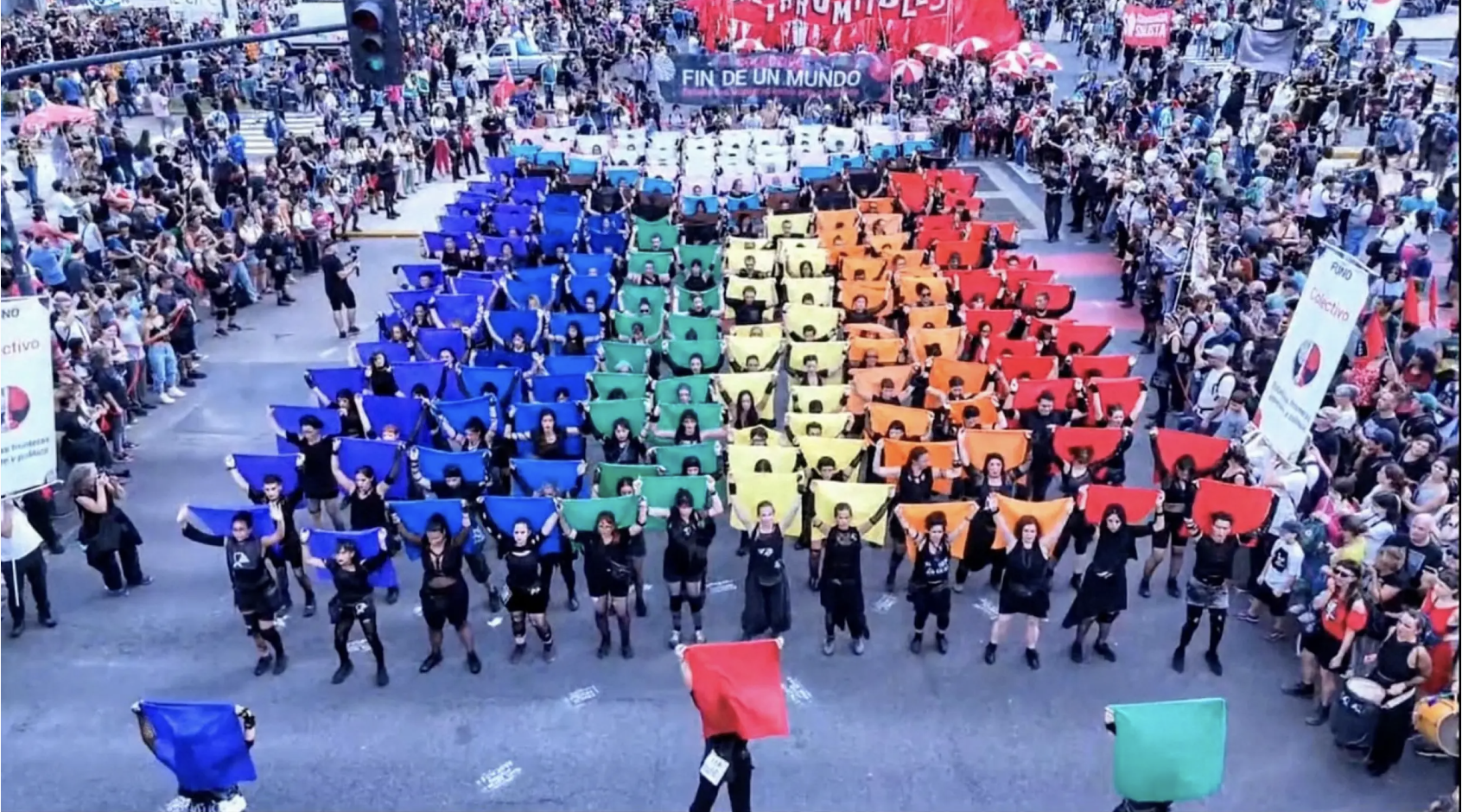
The simplicity of repeating the sequence facilitates some other type of presence, as though we’re elated by sheer effort. Against all odds, we’re moving successfully as one body, adaptable, incredibly resilient. In rehearsal, Caro Fernández, one of FUNO’s founding members, spoke about this collective movement as a manner of “constructing antifascism”: learning how to be in the street as one political body at a time when we’re so divided. Learning how to be two hundred hearts beating together.

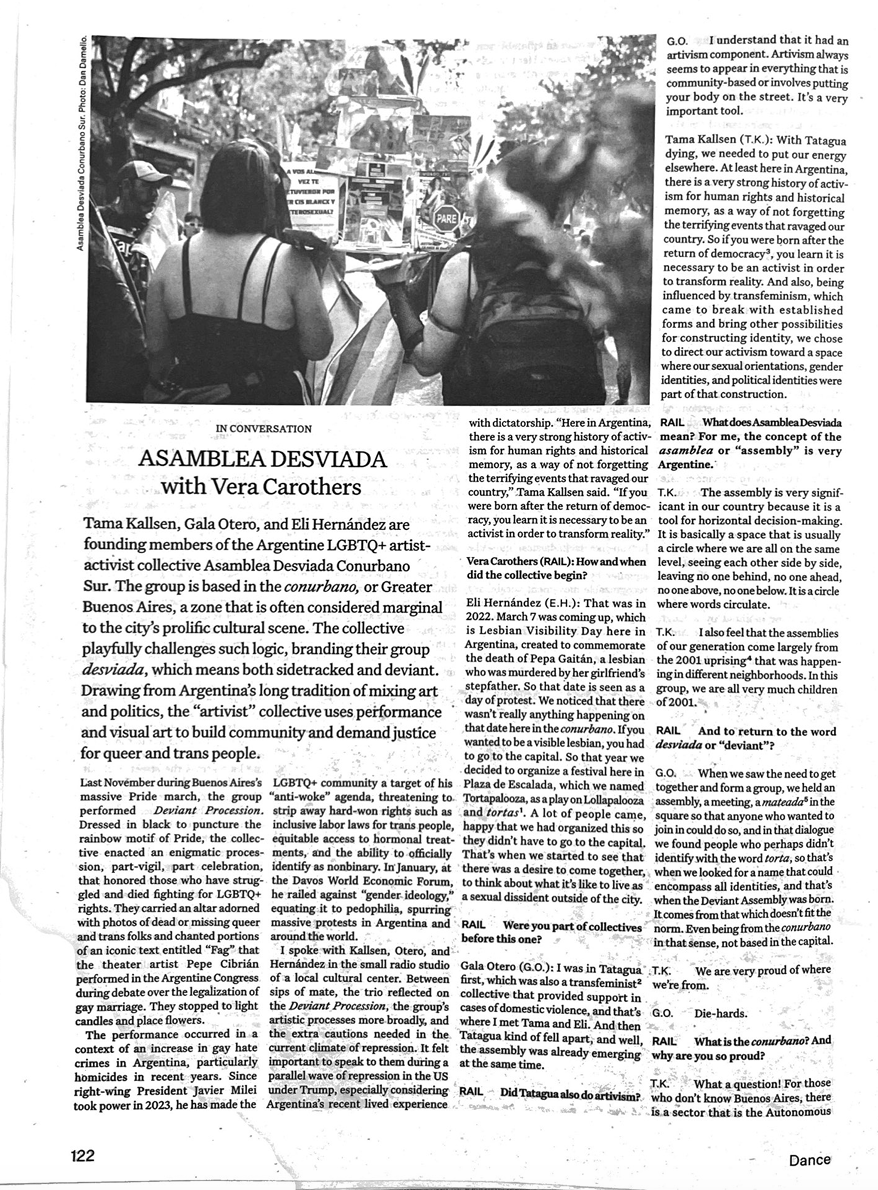
In Conversation with ASAMBLEA DESVIADA, The Brooklyn Rail, September 2025.

Between sips of mate, the trio reflected on the Deviant Procession, the group’s artistic processes more broadly, and the extra cautions needed in the current climate of repression. It felt important to speak to them during a parallel wave of repression in the US under Trump, especially considering Argentina’s recent lived experience with dictatorship. “Here in Argentina, there is a very strong history of activism for human rights and historical memory, as a way of not forgetting the terrifying events that ravaged our country,” Tama Kallsen said. “If you were born after the return of democracy, you learn it is necessary to be an activist in order to transform reality.”


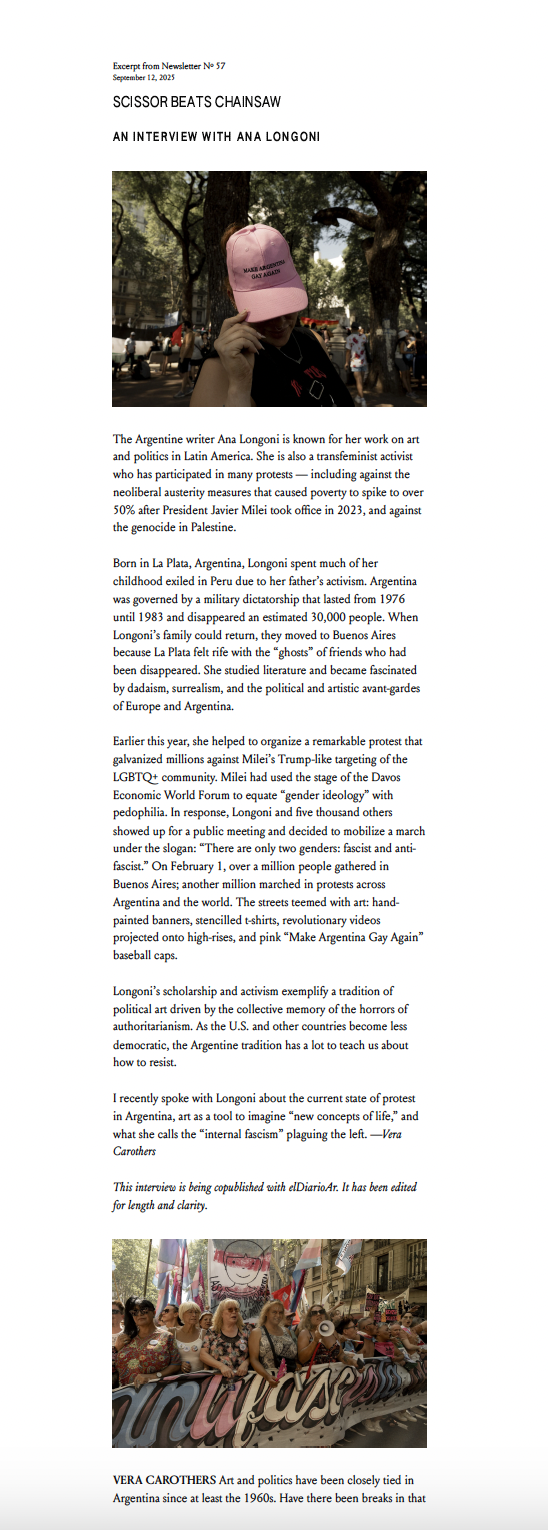
Scissor Beats Chainsaw: An Interview with Ana Longoni, Lux Magazine, September 2025.

“We mixed paste and in ten minutes, 100 people were pasting their art on the wall in front of the Lezama Park auditorium, turning it into a mural of lesbian visibility with the slogan “Scissor Beats Chainsaw.” The slogan has to do with positioning lesbian eroticism, i.e. scissoring, as a counterpoint to the destructive austerity measures that Milei is enacting such as closing state agencies, massive layoffs of public workers, reducing budgets, and destroying the country’s public sector.”

“I’m very committed to forms of political imagination that can emerge in that collective willingness to try out other ways of being in the street. It makes me think of the feminist movement. Specifically, that long night in 2018 waiting to see what would happen with the abortion legalization law the first time it was voted on, when it was voted down. Throughout that long night, people stayed up together, sustaining each other, all together without letting go.”